
Building a Clinical Academic Career: Lessons, Opportunities and the Power of Putting Yourself Out There!
Building a Clinical Academic Career: Lessons, Opportunities and the Power of Putting Yourself Out There
By Dr Natalie Jones.
When people see a research-active clinician, they often imagine a carefully mapped-out career path: scholarships, strategic moves, perfectly timed opportunities. But here’s a secret that most clinical academics don’t say out loud:
Clinical research careers are rarely linear.
There’s rarely a blueprint.
More often, they’re built one building block at a time.
Looking back on my own journey, I can trace a trail of moments that nudged me forward, none of which were guaranteed, and all of which required putting myself out there. This blog is an invitation to anyone curious about research to start shaping their own path.
And yes, you can start now.
Research Careers Are Built, Not Delivered
My route into research wasn’t the result of a masterplan. It was a collection of nudges, chances, ideas and brave leaps. Opportunities don’t usually come knocking; you often have to go hunting.
Some of my most important building blocks were simple acts of curiosity:
getting involved in audit and applying national guidelines
starting with tiny service improvement projects
presenting ideas to colleagues
asking questions
opening research studies for others
I became a Principal Investigator long before I felt “ready”, supporting a national trial using the Nintendo Wii for stroke rehabilitation. That step, as small as it seemed, was pivotal, because it changed how I thought about myself and my career.
Here’s the truth most people don’t hear early enough, small beginnings count. They’re the foundations for everything that comes next.
Apply for tiny pots of funding.
Join research networks.
Approach people whose work inspires you.
Seek mentors, people who are already on the journey.
Explore MSc programmes in research methods, courses and development roles to build your knowledge and CV.
Test your ideas in safe spaces with trusted friends.
And while success rates for grants can be low — sometimes less than 50% — every application is practice, and every “yes” genuinely can feel like winning the lottery. Each award I’ve received has been career-changing.
The Career-Changing Impact of NIHR Awards
In the past eight years, I’ve been fortunate to win over £500,000 in research and innovation funding. Not all at once, but piece by piece. Some of this was for primary research, innovation programmes and career development awards. I carved my own path taking the below stepping stones, but everyone’s path in unique.
Master’s in Clinical Research
Patient and public development awards
Bridging awards
and eventually, Doctoral and Post-Doctoral Research Fellowship Awards
Small grants for my own research and large grants in research partnerships and collaborations
Career development grants didn’t just buy time; they enable you to have excellent mentorship, skill-building, professional visibility, space to think, freedom to read, the joy of involving patients meaningfully, and the confidence to push ideas further.
If you’re even considering applying for an NIHR award, my advice is simple:
Start preparing now.
You don’t need a perfect plan, just momentum and people around you who can help and support your development.
The 3 Ps: Are three simple ingredients that have served me well.
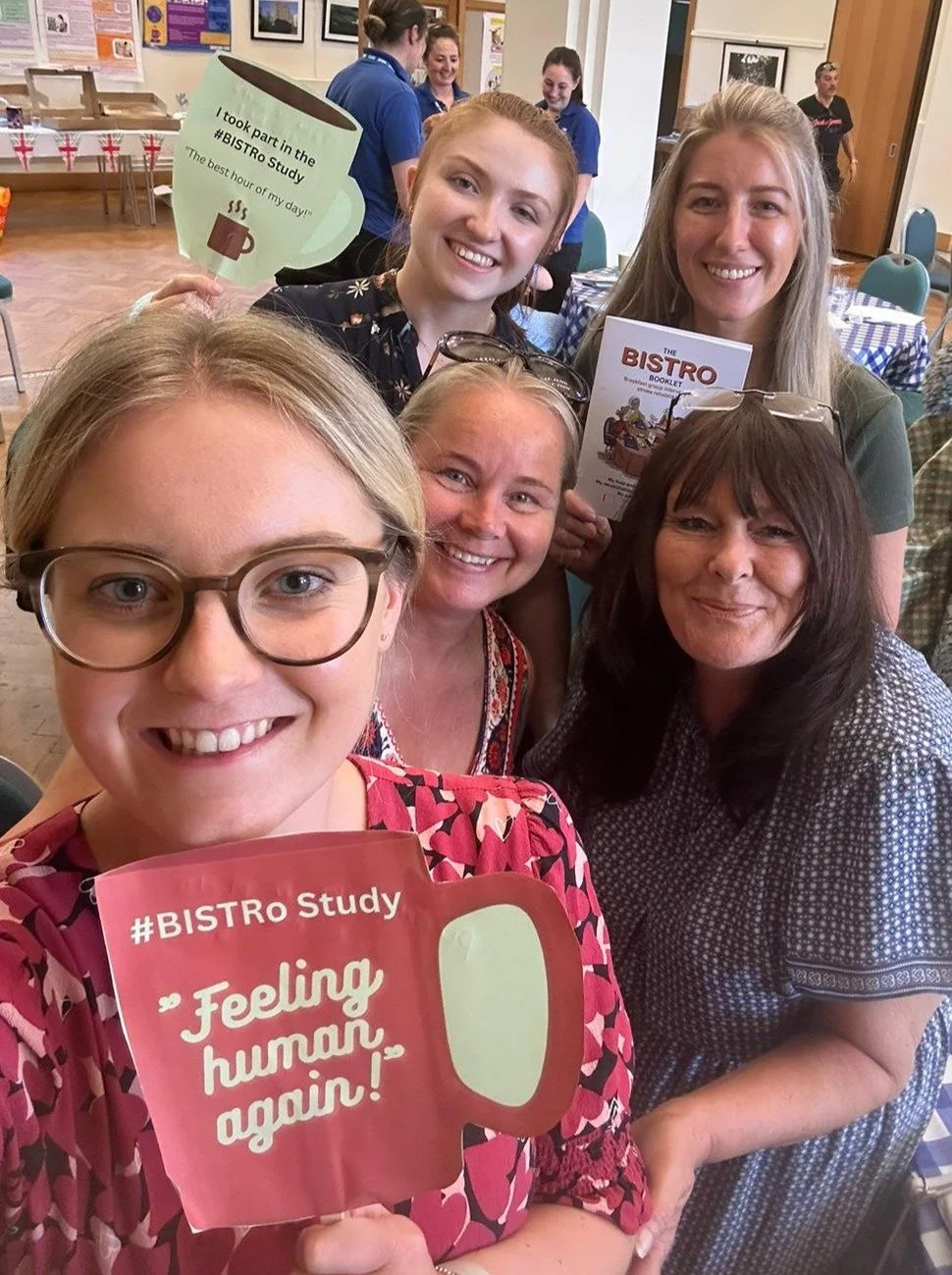
BISTRo Research Project 2023
Person.
Project.
Place.
No matter where you are in your journey, you can start strengthening these today
1. The Person
This is you, your experience, skills, curiosity, and potential.
Some practical steps:
✨ Create a career development plan
It doesn’t have to stretch 15 years ahead. Even knowing your next step is enough. Check out the Vitae Research Development Framework https://vitae.ac.uk/vitae-researcher-development-framework/
✨ Identify gaps
What will strengthen your CV?
A research mentor can help you identify and plan towards them.
✨ Practice academic writing
It doesn’t need to be in high-impact journals.
My first publications were in professional news and magazines. That’s how you learn the craft of different styles of writing.
✨ Build your network
Attend conferences.
Introduce yourself to researchers, be bold and brave.
Ask questions.
Use social media to increase your professional visibility.
✨ Say yes to opportunities
Even the tiny ones. Especially the tiny ones.
Research careers grow by accumulation, not by grand leaps.
2. The Project
When the time comes to apply for funding, you’ll need a clear, compelling research idea. Begin now by sitting with some key questions:
What problem do I want to solve?
Why does it matter?
What is my research gap?
What benefits will it bring, and to whom?
What outcomes can I realistically expect?
How does this fit into my longer-term career story?
If you can explain your idea in a three-minute lift journey, you’re halfway there.
And remember, a meaningful project is grounded in lived experience.
Patient and public voices shouldn’t be an afterthought or a token gesture. They should be the thread running through everything, like lettering in a stick of rock.
Apply for small PPI grants.
Ask people what matters to them.
Test ideas early.
Listen deeply to lived experience. (It will make your research sharper, more ethical, and more compelling).
3. The Place
Finally, find the right environment, because research is rarely a solo sport.
Choose your future collaborators wisely:
the organisations you want to be part of
the people whose thinking inspires you
the supervisors who will challenge and nurture you
the methodologists who will stretch your skillset
the peers who will cheer you on
Seek mentors who’ve walked the path.
Find role models who raise your ambition.
Collect champions who see your potential.
And recognise this: There will be periods where time is tight, pressures rise, and life gets complicated. In those moments, even one meaningful conversation with a colleague can keep the momentum alive.
Every conversation, every email, every new connection is a step forward.
Reach for the Stars (and apply)
Something I wish I’d known earlier, you do not need to be extraordinary to start a research career. You only need to be curious and persistent.
Most researchers didn’t begin with complete confidence.
They began by trying, applying, failing, asking, and trying again and every grant, publication, project, workshop, connection or tiny spark of progress matters.
If you want to develop as a clinical academic:
seek out opportunities
take risks
ask for help
keep learning
believe you have something valuable to contribute
Because you do!
And who knows, maybe in years from now you’ll look back at the building blocks you created today and realise just how far you’ve travelled.
Reach for the stars. You might be surprised where you land ⭐
NIHR career development funding is available through the NIHR Academy at different career levels, from undergraduate to professorships. Our funding is for all professionals across health and social care.
https://www.nihr.ac.uk/career-development/research-career-funding-programmes
If you would like to explore some mentoring to get started on your clinical academic journey, or you would like some time and space to discuss the next steps, please go to my contacts page to book a 30 minute complementary discovery call.
