
From Conversation to Collaboration: Why Disseminating Research Matters
Following my keynote presentation at the Naidex 2026 Neurorehabilitation Event this week, I’ve been reflecting on the importance of sharing research beyond publication and how dissemination can actively shape the future of our work.
Over the past eight years, my research has focused on stroke rehabilitation, particularly exploring the use of breakfast groups as a therapeutic medium. What has become increasingly clear to me is that the true impact of research is not realised in isolation, but through the conversations it sparks.
I’ve been fortunate to present my findings nationally across the UK, as well as internationally in Germany and Spain. Each new audience brings fresh perspectives, questions, and challenges. These exchanges don’t just validate findings, they expand them. They push thinking in directions I might never have considered alone.
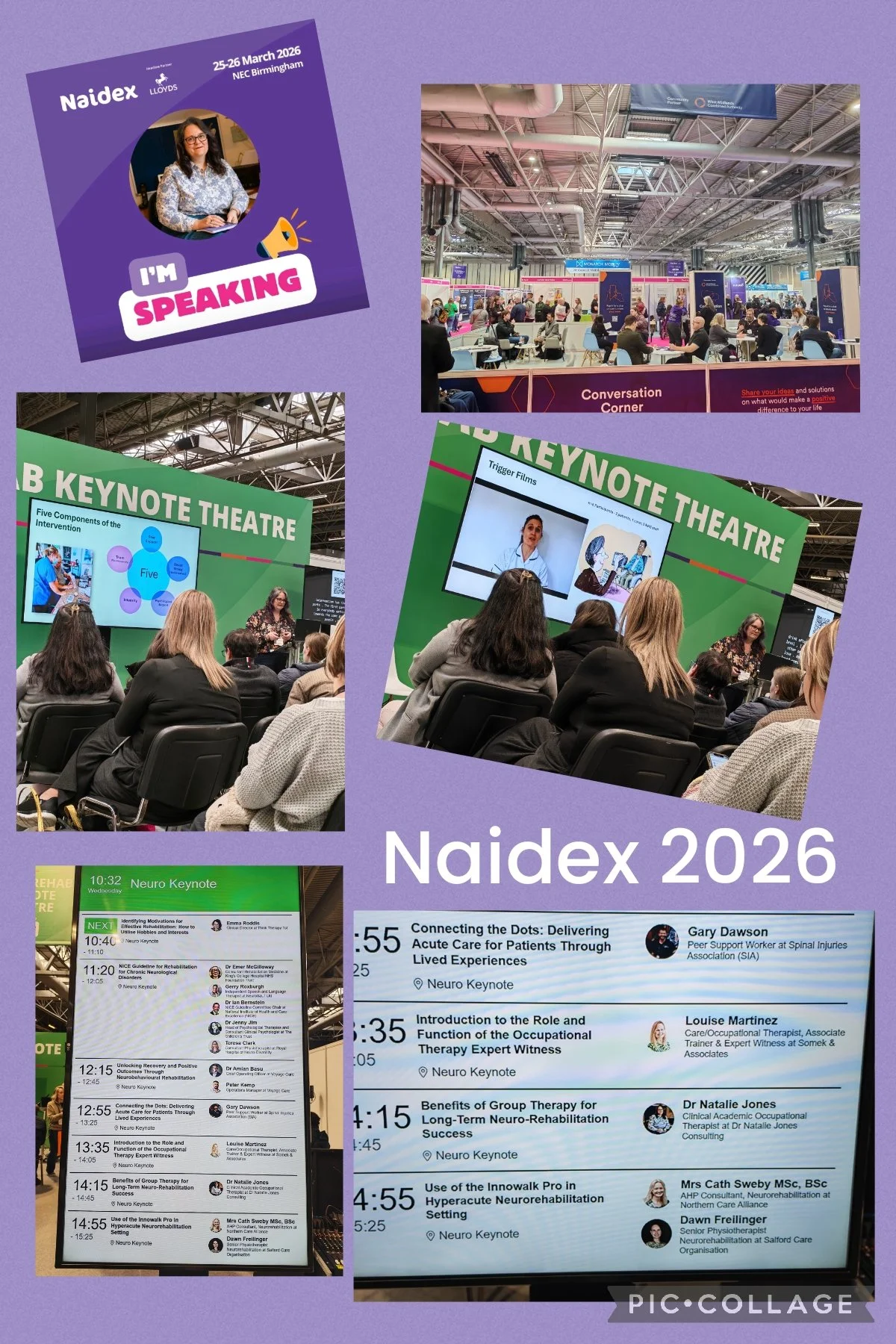
Naidex 2026
Most recently, delivering keynote presentations has encouraged me to reflect more deeply on the versatility of my work. While my focus has been on stroke, I am now beginning to see how this approach could translate into other settings. For example:
Breakfast groups in schools for neurodiverse children
Mealtime-based interventions in mental health settings, such as with veterans
Broader applications across multidisciplinary rehabilitation contexts
These ideas did not emerge in a vacuum, they were born from dialogue.
At Naidex, I had valuable discussions with occupational therapists, speech and language therapists, and physiotherapists from across the UK. Many expressed interest in adapting mealtime group approaches within their own specialities. These interactions reinforced how dissemination is not a one-way process, but a collaborative exchange.
Similarly, at a recent conference in Aberdeen, a chance conversation on a bus led to the development of a new collaboration for my next study. It’s a reminder that impactful research relationships are often formed in the most unexpected moments.
Dissemination is often framed as the final step of research. In reality, it is a catalyst for what comes next. It transforms findings into ideas, ideas into collaborations, and collaborations into future innovation.
As researchers and clinicians, we have a responsibility not only to generate knowledge but to share it widely, openly, and actively. Because every presentation, every question, and every conversation has the potential to take our work somewhere new.
And sometimes, it’s those informal discussions over coffee, at breakfast, or even on a bus that make the biggest difference.
Further Reading
For those interested in how to effectively share research findings, this paper is a great starting place:
Capili B, Anastasi JK. Methods to Disseminate Nursing Research: A Brief Overview. American Journal of Nursing, 2024.
https://pmc.ncbi.nlm.nih.gov/articles/PMC11286224/
This paper provides a clear and accessible overview of different strategies for disseminating research, highlighting that publication alone is not enough to ensure impact. It outlines a range of approaches, from conferences and presentations to digital platforms and community engagement, all aimed at reaching diverse audiences.
What is particularly useful is its emphasis on tailoring dissemination to the intended audience and purpose. This strongly resonates with my own experience: each new audience brings new insights, questions, and opportunities for collaboration.
For clinicians and researchers alike, the paper serves as a practical reminder that dissemination is not simply about sharing results, but about creating meaningful engagement that can influence practice, policy, and future research.
natalie.jones56@nhs.net
https://www.drnataliejonesconsulting.com/
