
Leadership what me?
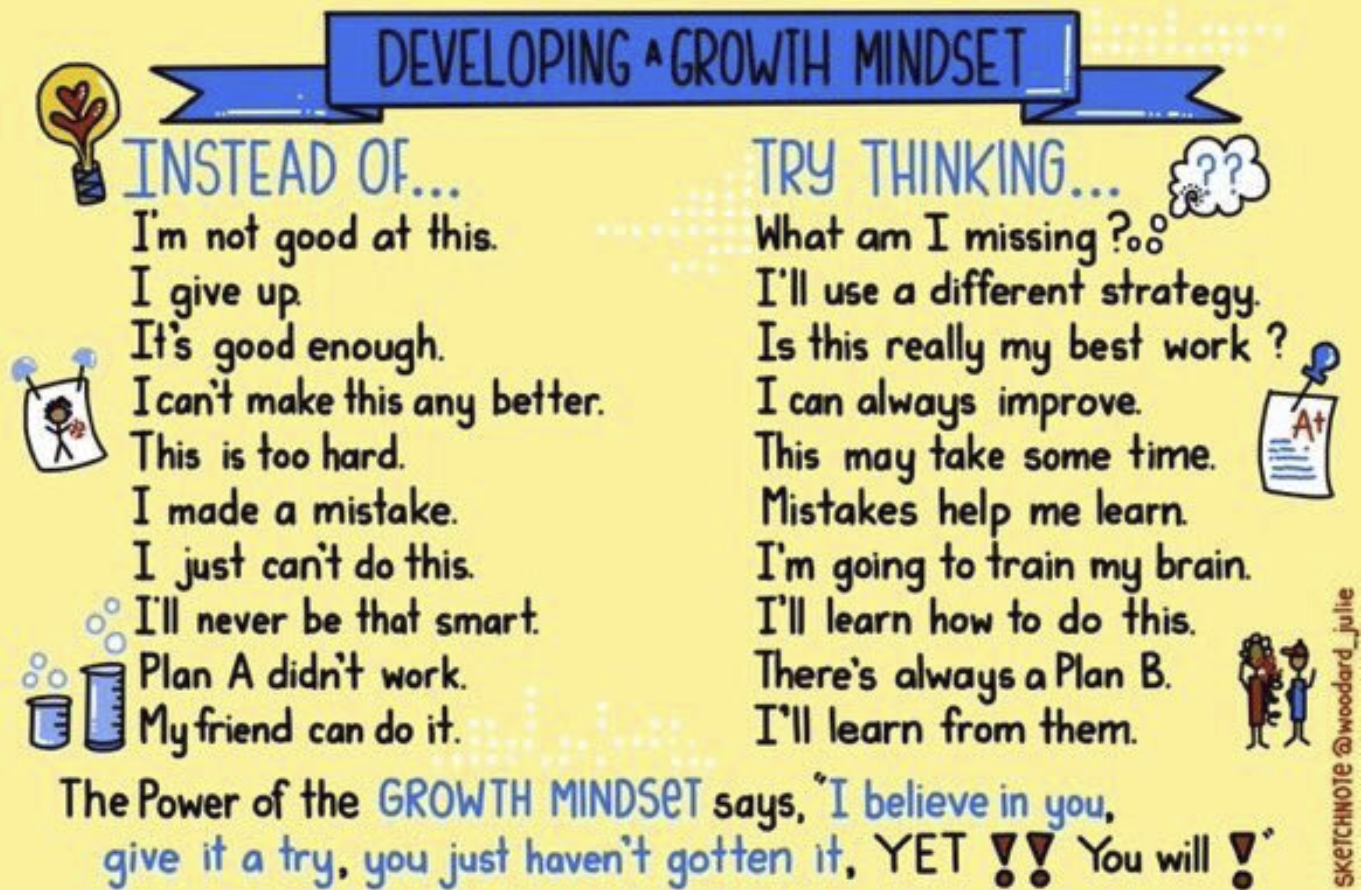
Developing a growth mindset
In 2018 Karin Orman RCOT’s Lead Professional Advisor posted a blog about Leadership in Occupational Therapy, challenging OTs.
‘To think differently about how we grow leadership within the profession and to start thinking about ourselves as leaders.’
Karin hits on an issue which is important to me.
“We may have, in many areas of practice, lost our traditional management structure, but that does not have to mean we lose leadership within the profession”.
I recently wrote an article about this in OTnews (Jones 2019) describing my voyage into professional leadership. This challenge from Karin resonates with my experience of therapy management structures. Over the last ten years, we have moved towards integrated teams, and allied health professional leadership have taken root.
Which means single profession line management is no longer the ‘norm,’ you are more than likely to be managed and led by someone from another professional background, and this brings both challenges and new opportunities. Occupational Therapists who don’t have a professional-led talk about ‘not having a voice’, or the ‘OT voice is not loud enough’. This makes it more important to think about and reflect on opportunities to lead and influence, regardless of the organisational structures you work in.
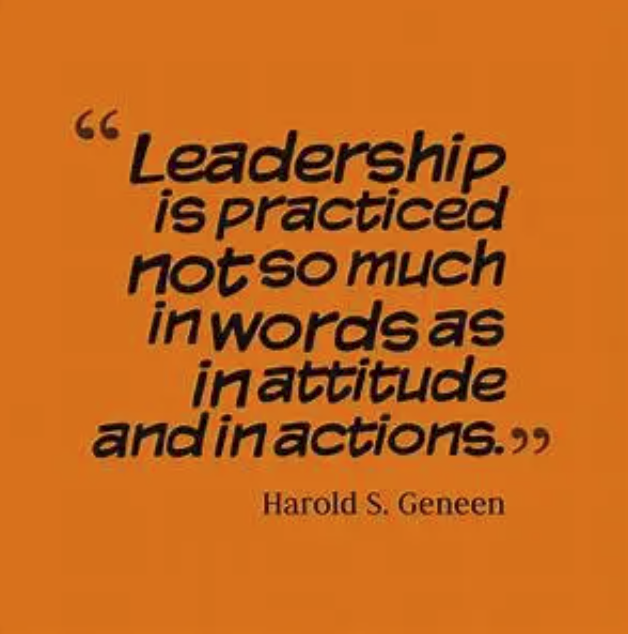
It is no accident that the third pillar of the Royal College of Occupational Therapists Career Development Framework is leadership. It begins at entry level, where newly qualified Occupational Therapists are encouraged to act as role models, promoting the profession and demonstrating its value through their unique contributions to practice. At the other end of the spectrum, at level nine, leadership is described as the ability to:
“Lead and influence the political and economic climate, locally, nationally and internationally, which impacts service delivery.”
The final column of the framework is titled mindset. It is this concept that invites deeper reflection.
What is a leadership mindset? Do you recognise it in yourself, or in others? Perhaps you can identify examples of both positive and less effective leadership from your own experience. Taking time to reflect on these can help clarify what a strong leadership mindset looks and feels like in practice.
Think about the role models who have shaped your career.
What qualities and values did they embody? Equally, what have you learned from less positive experiences? Identifying the values you want to lead with is an important first step.
From there, you can begin to create opportunities to develop your skills and knowledge in alignment with your leadership aspirations, actively shaping and strengthening your own leadership mindset.
All too often, I have observed excellent Occupational Therapists at every stage of their careers who lack self-belief and professional confidence. Despite clear evidence of their competence, impostor syndrome can take hold. This blog explores the fine balance between humility and self-doubt.
“The most effective leaders are not those who eliminate doubt entirely, but those who learn to understand it, reframe it, and refuse to let it define them”.

Does this resonate?
“You’ll remain convinced that you do not deserve the success you’ve achieved, dismissing this as luck or fortuitous timing”.
Psychologists describe this as a failure to internalise your accomplishments, an inability to believe you are genuinely deserving of your position. How often have you brushed off a compliment? The truth is, this feeling is more common than we think. If you look around at the colleagues you admire most, chances are they’ve experienced it too.
If you recognise yourself in this experience of imposter syndrome, how can you begin to build the personal and professional confidence needed to step into leadership opportunities when they arise? What strategies have helped you quiet that persistent, sometimes paralysing self-doubt?
If you were mentoring yourself, what advice would you give about developing a leadership mindset and strengthening self-belief?
And if self-reflection feels difficult, consider seeking out a leadership mentor. The right mentor can offer constructive feedback, a fresh perspective, and a supportive, non-judgemental space to think things through. They don’t need to come from the same profession; what matters is their ability to listen, challenge, and encourage your growth.
A good mentor will nurture your development as a leader, help you see situations differently, and, at times, support you in confronting that “imposter syndrome” voice that so often undermines confidence.
In my own journey, I’ve been fortunate to have several mentors and role models who were not Occupational Therapists. What they brought instead were diverse skills, perspectives, and experiences that proved invaluable in shaping my leadership and supporting my development.
Perhaps you are already on the leadership journey and can share some examples of ways in which you have developed as a leader?
What strategies have you tried and tested in your leadership journey so far?
What opportunities are there for you to experience leadership in your role?
New and unfamiliar opportunities can open the door to experiences, perspectives, and people you might not otherwise encounter. One idea to explore is creating a “shadow board”, a group of peers who mirror the work of an executive board by reviewing the same papers and discussing key issues together. This kind of ‘mini board’ can offer valuable insight into decision-making processes, while allowing you to test ideas, hear different viewpoints, and build confidence in a safe environment. Find out more about shadow boards here 👉https://theinspiringleadersnetwork.co.uk/shadow-board/ Experiences like these can add real depth to your leadership development, helping you build new skills, expand your knowledge, and broaden your perspective.
Occupational Therapists are natural problem-solvers, and with a touch of creativity, there’s huge potential to design meaningful learning opportunities and environments that support leadership growth. By sharing ideas and learning from one another, we can create added value not only for ourselves but for the wider profession. So, what might be possible if we put our collective thinking together? Could we develop new and innovative approaches to continuing professional development that truly enhance leadership skills and confidence?
There have never been more opportunities for Occupational Therapists to move into leadership roles. From leading a Band 5 peer support group, to pioneering in new and emerging roles, to AHP Director roles in the NHS and Principal OT roles in Social Care. Stuart Palma, Head of Allied Health Professions at NHS England and NHS Improvement, produced some recommendations that the NHS start to explore having a Chief AHP within their organisations, creating greater visibility at board level. There are already OTs taking up these positions, and we must be ready! Find out more here 👉 https://www.england.nhs.uk/ahp/implementing-ahp-action/developing-allied-health-professional-leaders-an-interactive-guide-for-clinicians-and-trust-boards/
So why is mindset important in leadership? A growth leadership mindset is the belief that your abilities can evolve, that you can learn, develop, and continually strengthen your leadership skills. Research suggests that those with a growth mindset are more willing to embrace challenges, respond constructively to feedback, and engage in effective problem-solving.
As a leader, I see myself as a continual learner, motivated by self-improvement. Developing a broad “toolbox” of leadership skills helps build the mental preparedness needed to navigate new and often difficult situations. I’ve also learned to stay open to opportunities that don’t always come with an ‘Occupational Therapist’ job title. Stepping outside your professional comfort zone can feel risky, but it can also be one of the most rewarding decisions you make.
Last year, I took on a role within an integrated care system workforce hub, supporting workforce innovation and development. It was completely different from anything I had done before, yet I found myself drawing on every skill in my OT and leadership toolbox. Through this experience, I influenced the development of Occupational Therapy roles in primary care, contributing to the appointment of an OT within a primary care network to support a frailty project. A small change, perhaps, but one with the potential for a lasting and meaningful impact.
Through leadership coaching, I’ve also come to appreciate the importance of reflection. Taking time to explore and understand your own leadership mindset is a powerful starting point for growth. Opportunities for Occupational Therapists to be “loud and proud,” to have their voices heard and to be present in the room are plentiful. But to truly seize these opportunities, we must first cultivate the mindset that allows us to recognise, pursue, and step confidently into them.
The Elizabeth Casson Trust has a clear strategic commitment to developing leadership within Occupational Therapy, supporting individuals to take the profession forward within an evolving healthcare landscape. The Trust defines leadership as the ability to “envision, articulate and clearly demonstrate—by example—the scope and benefits of occupational therapy to individuals and society as a whole, thereby positively promoting the profession to as wide an audience as possible.”
Their website offers a wealth of resources to support leadership development, alongside a range of opportunities focused on career progression and mentoring. For those looking to grow their confidence, expand their skills, or explore new directions, it provides a valuable starting point for development. Check out here 👉 https://elizabethcasson.org.uk/your-development/mentoring/
Dee Christie ( Chair of the Trust) and I explored these questions in a recent Twitter #OTalk, where they sparked rich discussion and thoughtful reflection. Why not take them forward into your own practice? Use these questions as a starting point for conversation with your colleagues. Bring them to a team meeting, a supervision session, or an informal peer discussion. They can help you collectively explore what leadership looks like within your team, and how you can support one another to grow.
Questions for reflection and discussion:
What does a strong leadership mindset look like in practice?
How do you build the personal and professional confidence needed to step into leadership opportunities?
What strategies have supported your development as a leader?
What novel or creative approaches have you used in your continuing professional development to strengthen your leadership skills and knowledge?
Recent national strategies continue to highlight why leadership remains such a prominent focus for Occupational Therapists. The Royal College of Occupational Therapists emphasises the importance of developing a confident, adaptable workforce capable of influencing change and shaping future services (RCOT, 2021). Similarly, NHS England reinforces the critical role of Allied Health Professionals as leaders within health and care systems, driving innovation and improving outcomes (NHS England, 2022).
Leadership is increasingly recognised not as a position, but as a set of behaviours and mindsets that can be developed over time. Frameworks such as those from the NHS Leadership Academy support this view, encouraging individuals to build self-awareness, confidence, and the ability to influence across systems. This aligns with broader evidence suggesting that clinicians are well-placed to step into leadership roles, although barriers and enablers continue to shape this journey (Faculty of Medical Leadership and Management, 2018).
I believe by creating space for these conversations, we can learn from each other, challenge our thinking, and actively shape the future of leadership within Occupational Therapy.
References
Faculty of Medical Leadership and Management (2018) Barriers and enablers for clinicians moving into senior leadership roles. Available at: https://www.gov.uk/government/publications/clinicians-moving-into-senior-leadership-barriers-and-enablers (Accessed: 16 April 2026).
NHS England (2022) Allied Health Professions Strategy for England: AHPs Deliver. Available at: https://www.england.nhs.uk/ahp/ahps-deliver/ (Accessed: 16 April 2026).
Royal College of Occupational Therapists (2021) Workforce Strategy 2021–2026. Available at: https://www.rcot.co.uk/workforce-strategy (Accessed: 16 April 2026).
NHS Leadership Academy (n.d.) Healthcare Leadership Model. Available at: https://www.leadershipacademy.nhs.uk/resources/healthcare-leadership-model/ (Accessed: 16 April 2026).